Views: 0 Author: Site Editor Publish Time: 2026-03-27 Origin: Site
In the world of LED lighting design, achieving color consistency is a crucial factor that can make or break the aesthetic quality of your project. Whether you're designing an indoor lighting system, outdoor signage, or an intricate architectural feature, maintaining consistent color across your lighting system ensures that the final effect is visually appealing and professional. LED light technology has advanced significantly over the years, offering a variety of options such as SMD, COB, neon flex, and integrated flex, each of which can impact the overall color uniformity and performance. In this article, we will explore the importance of color consistency in LED lighting, how different LED light types influence it, and practical tips to improve and maintain consistency throughout your projects.
At Orient Lighting, we provide high-quality LED lighting solutions, including various LED flex products, designed to meet your needs for consistent and vibrant lighting. Let’s dive into how to select the right products and techniques to ensure your lighting maintains perfect color consistency.
Color consistency refers to the ability of a light source to maintain the same color output over time, across different batches, and throughout its entire service life. This is especially important in LED lighting design because variations in color between different LEDs can create a distracting and unprofessional appearance, which is not acceptable in high-end applications. Color consistency is typically measured using metrics like CCT (Correlated Color Temperature) and CRI (Color Rendering Index), which help evaluate the color quality and uniformity of the light produced.
In practical terms, color consistency ensures that all lights in a project—whether in signage, accent lighting, or architectural features—appear uniform and cohesive. Poor color consistency can cause flickering, color shifts, or noticeable gaps between lighting fixtures, which ultimately detracts from the desired effect.
The visual impact of color inconsistency can be substantial. When multiple light sources exhibit different color temperatures or noticeable variations in brightness, it can create uneven lighting that is not only unattractive but also reduces the overall effectiveness of the lighting design. For instance, if a building's facade is lit using LED lighting that varies in color temperature, the final effect could appear patchy, unprofessional, or distracting.
On the other hand, when color consistency is maintained, the lighting design flows smoothly, creating a uniform and pleasing effect. Whether it's for a commercial space, art installation, or outdoor sign, maintaining consistent color across all fixtures is key to achieving a high-quality, professional look.
LEDs come in various forms, each with different characteristics that influence color consistency. The most common types used in LED lighting design include SMD, COB, neon flex, and integrated flex. Understanding how each of these types affects color uniformity is crucial when choosing the right lighting for your project.
Product Type | Color Uniformity | Ideal Use Case |
SMD Flexible Strip | Good | General lighting |
COB Flexible Strip | Excellent | Seamless wash lighting |
Neon Flex | Soft, diffused | Architectural outlines |
Integrated Flex | Tailored consistency | Premium installations |
SMD Flexible Strip: SMD (Surface-Mounted Device) LEDs are widely used in LED flex strips. These LEDs offer good color uniformity and are ideal for general-purpose lighting applications. While they provide consistent light, they may not be as uniform as other types like COB in high-end applications where seamless lighting is essential.
COB Flexible Strip: COB (Chip on Board) LEDs offer superior color consistency and uniformity. These strips are perfect for applications requiring seamless wash lighting, where even light distribution without visible hotspots is needed. COB strips are often used in high-end installations where aesthetic precision is crucial.
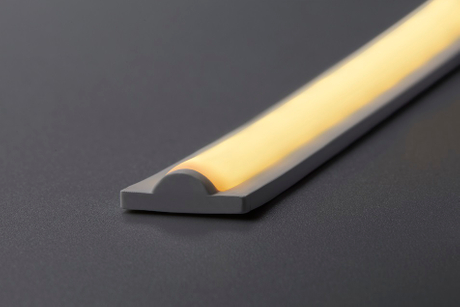
Neon Flex: Neon flex LED strips provide a soft, diffused light that creates a glowing effect, which is ideal for architectural outlines and signage. While it offers a unique visual appeal, maintaining color consistency in neon flex requires careful selection of quality materials and control systems to ensure uniform light distribution.
Integrated Flex: Integrated flex strips offer tailored consistency, making them suitable for premium installations where uniform color is required across a wide area. These products integrate the LED chips into the strip itself, ensuring that the light output is both consistent and smooth, making them perfect for demanding design projects.
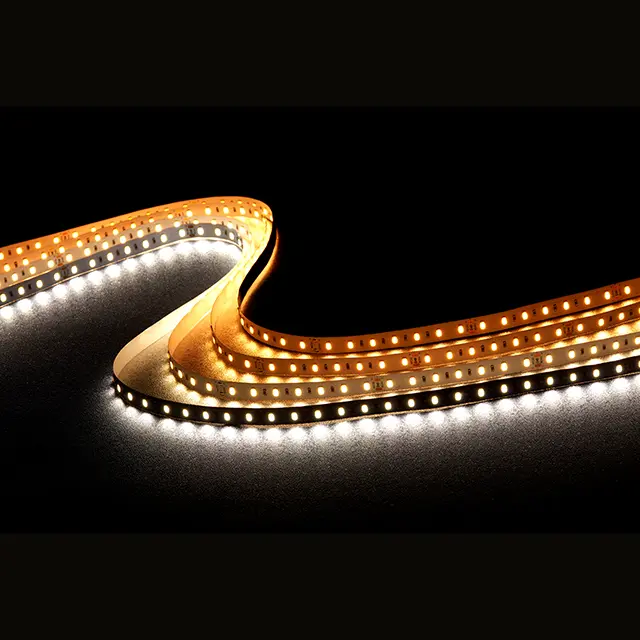
When selecting LED light for your projects, choosing high-quality LED chips is essential to achieve color consistency. High CRI (Color Rendering Index) LED chips are designed to produce light that closely resembles natural daylight, ensuring that the colors of objects are accurately rendered. A higher CRI (generally above 80) means better color consistency and a more vibrant, true-to-life appearance in your lighting designs.
For applications such as retail lighting, art galleries, or showrooms, where accurate color reproduction is critical, opting for high-CRI LEDs ensures that your lighting enhances the appearance of products or artwork while maintaining visual harmony.
Another key aspect of ensuring color consistency is maintaining consistent CCT (Correlated Color Temperature) across all batches of LED products. CCT refers to the color temperature of the light emitted by the LED, typically measured in Kelvin (K). To avoid noticeable shifts in color, it is essential to match the CCT across all LED flex strips and components used in a project.
When purchasing silicone neon flex or other LED lighting products, always verify that the CCT matches across different batches. Manufacturers that offer precise control over this aspect of production will ensure that your lighting design remains consistent throughout.
Voltage drop can cause inconsistencies in the light output, particularly in long LED light installations. When designing your lighting system, it’s crucial to ensure that the power supply is correctly matched to the neon flex or LED strips you are using. A mismatched power supply can lead to uneven brightness, color shifts, or flickering lights.
Properly calculating and adjusting for voltage drop is essential, particularly in long runs of LED flex, to ensure uniform light distribution and color consistency across the entire installation.
To improve color uniformity, ensure that the LED flex strips are joined seamlessly, without visible gaps or inconsistencies. Using diffusers can help create a smoother, more uniform light output. Diffusers distribute the light more evenly, helping to eliminate visible hotspots and improve the overall aesthetic of the installation. This is especially important for neon flex products, where a continuous, smooth glow is often the desired effect.
To guarantee color consistency, use tools like spectrometers to measure the color output of your LED light products. A spectrometer helps determine whether the color temperature and brightness are consistent across different fixtures or batches. This is particularly important when working on large installations, where uniformity across many light sources is essential.
SDCM (Standard Deviation of Color Matching) and ΔE (Delta E) are two important metrics used to measure color consistency in LED lighting. SDCM quantifies the variation in color between different LEDs, while ΔE measures the difference between the expected color and the actual color produced. The lower these values, the better the color consistency across the lighting system. When choosing LED flex, ensure that these metrics are as low as possible to achieve superior uniformity.
One common challenge when working with LED lighting design is the presence of cold spots and hot spots, where the light output is uneven. These variations can be minimized by ensuring proper power matching, using high-quality LED chips, and ensuring that diffusers are properly installed to create a smooth, uniform light effect.
Using the right diffuser profiles and optics is essential for achieving color consistency. The right diffuser can help eliminate shadows and uneven light, providing a uniform output that enhances the overall lighting design. Additionally, carefully selecting the optics used in your LED flex can direct the light precisely where it’s needed, reducing the risk of light inconsistencies.
Achieving color consistency in LED lighting design is crucial for ensuring a professional and aesthetically pleasing outcome, especially for complex projects like signage, architectural lighting, and high-end interior designs. By understanding the impact of LED types, utilizing high-quality components, and following best practices during installation, you can guarantee that your lighting will maintain a consistent and vibrant appearance. At Orient Lighting, we offer a wide range of LED lighting solutions, including high-quality neon flex and other LED products, designed to provide color consistency and durability.
To explore our full range of LED lighting solutions and find the perfect option for your next project, contact us today!
1. Why is color consistency important in LED lighting design?
Color consistency ensures that lighting looks uniform across all fixtures, creating a visually appealing effect that enhances the overall aesthetic of the project.
2. How do I achieve color consistency in my LED lighting project?
Choose high-quality LED chips, ensure matching CCT across batches, and use proper diffusers to eliminate hotspots and create uniform lighting.
3. What is the difference between SMD and COB LEDs for color consistency?
COB LEDs offer better color consistency than SMD LEDs, making them ideal for projects requiring seamless, even light distribution.
4. What are the common challenges in ensuring color consistency in LED designs?
Challenges include cold spots and hot spots, which can be mitigated through proper installation practices and the use of high-quality diffusers.