Views: 0 Author: Site Editor Publish Time: 2026-04-21 Origin: Site
Treating lighting as an afterthought guarantees the entire architectural vision suffers. A recurring industry problem is handling lighting as a post-drywall decorative element rather than a deeply integrated architectural system. Leaving lighting decisions until late stages invites severe financial and aesthetic risks. Project teams often face frustrating scope creep, exposed wiring, mismatched color temperatures, and severely compromised custom millwork.
We built this guide to help project managers, architects, and designers avoid these common pitfalls. You will learn a clear framework for specifying integrated linear lighting solutions during the initial schematic design phase. Our goal is to empower you to align technical specifications, manage structural integration, and select the right systems before construction begins. Implementing these strategies ensures your lighting enhances the environment seamlessly. Early alignment transforms linear lighting from a potential construction obstacle into a highly controlled design asset.
Pre-Drywall Integration is Cost-Effective: Specifying channels, drivers, and wiring paths early prevents costly change orders and structural tear-outs.
Specification Drives Performance: Selecting the right LED strip light requires evaluating objective metrics like CRI, MacAdam step binning, and thermal management.
Infrastructure Precedes Installation: Seamless integration of an LED flexible strip relies on early electrical load planning, voltage drop calculations, and control system compatibility (e.g., DALI, 0-10V).
Supplier Verification Lowers Risk: Vetting lighting manufacturers for photometric data, warranty terms, and custom-cut capabilities is critical for high-end hospitality and residential execution.
Lighting design has shifted fundamentally over the last decade. Historically, designers relied heavily on localized decorative fixtures. They placed sconces, pendants, and chandeliers to illuminate specific zones. Today, high-end design prioritizes integrated architectural lighting. We use hidden linear systems to define spatial volume. They wash textured walls, emphasize ceiling heights, and guide movement through corridors. This approach embeds illumination directly into the building fabric. The light itself becomes a structural element. You must plan these systems during schematic design. They require precise recesses, dedicated framing, and hidden power sources. You cannot simply attach them to finished surfaces later.
Premium spaces demand flawless execution. Guests and homeowners expect sophisticated environments. We measure the success of an integrated lighting installation using three specific criteria:
Zero visible light sources: True architectural lighting eliminates glare. You should only see the effect of the light, never the diodes themselves.
Perfect control synchronization: Linear systems must communicate flawlessly with centralized smart platforms. They need smooth dimming curves on systems like Control4, Lutron, or Crestron.
Consistent color rendering: Wood grains, fabrics, and stone must look identical across different lighting zones. The color temperature must remain perfectly stable.
Failing to plan linear systems early destroys project budgets. You face massive expenses when retrofitting electrical infrastructure into finished spaces. Adding conduit to finished drywall requires destructive cutting and patching. You must then pay for drywall repair and repainting. Modifying custom millwork to accommodate bulky heat sinks often ruins expensive veneers. Carpenters must dismantle built-in cabinets to hide necessary wiring. Relocating power supplies also causes major delays. Drivers require ventilation and maintenance access. If you hide them behind sealed walls, they will overheat and fail. Fixing these oversights always costs significantly more than initial planning.
High-end spaces require premium color accuracy. You cannot rely on basic metrics alone. A quality LED strip light must boast a High Color Rendering Index (CRI) of 90 or above. This ensures accurate rendering of interior finishes. You must also evaluate the R9 value. The R9 metric measures how well the light renders deep reds. High R9 values are crucial for illuminating warm wood grains, luxurious fabrics, and natural human skin tones.
Color consistency matters just as much as color quality. Diodes naturally vary during manufacturing. Quality manufacturers use tight color binning to group similar diodes. We measure this consistency using MacAdam ellipses. You should always specify 2-step or 3-step MacAdam ellipses for premium projects. This strict binning prevents noticeable color shifting across long architectural runs. A ceiling cove should not look warm white at one end and slightly green at the other.
Output requirements dictate the specific product you select. You must evaluate lumens per foot rather than focusing solely on wattage. This metric ensures adequate task or accent lighting. You want enough illumination to highlight architectural features without overpowering the space. Accent coves require different lumen packages than primary kitchen task lighting.
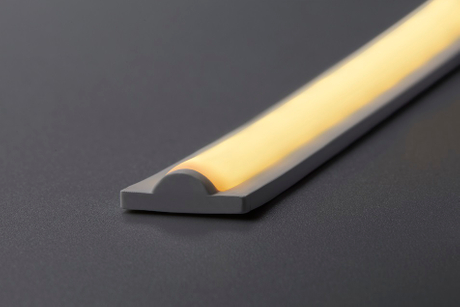
Pitch density plays a vital role in visual aesthetics. Pitch density refers to the number of individual LEDs per meter. High-density strips eliminate visible spotting. They create a smooth, diode-free wash of illumination. Many projects now utilize Chip-on-Board (COB) technology. These strips pack hundreds of tiny diodes together under a single phosphor layer. They deliver continuous, unbroken light lines even in shallow aluminum profiles.
Different architectural zones demand specific environmental protections. You must specify appropriately rated linear systems for each location. We use Ingress Protection (IP) ratings to measure dust and moisture resistance. Specifying the wrong IP rating leads to rapid system failure.
IP Rating | Protection Level | Typical Architectural Application |
|---|---|---|
IP20 | No water protection. Dust resistant. | Dry ceiling coves, living room shelving, walk-in wardrobes. |
IP54 / IP65 | Splash-proof. Resists condensation. | Kitchen under-cabinets, vanity mirrors, covered patios. |
IP67 | Highly water-resistant. Fully sealed. | Hospitality showers, saunas, outdoor step lighting, exterior facades. |
Integrating linear lighting into cabinetry requires tight coordination. You must embed aluminum channels into custom millwork before fabrication begins. Carpenters need precise dimensions to rout grooves into shelving and wardrobes. The channel must sit perfectly flush against the wood surface. If you wait until the cabinets arrive on site, you cannot achieve a seamless look. Surface-mounting profiles on top of finished shelves looks clumsy. It exposes the hardware and ruins the bespoke aesthetic. Early specification allows millworkers to create hidden chases for low-voltage wiring. They can route cables behind cabinet backs for a perfectly clean installation.
Drop ceilings offer excellent opportunities for indirect illumination. However, you must calculate the correct setback and mounting angles during the framing stage. The distance between the light source and the adjacent surface determines the light throw. Improper setbacks cause harsh shadow lines. They can highlight drywall imperfections instead of washing the ceiling evenly. We recommend angling the extrusion slightly inward. This directs the light beam toward the center of the ceiling. It maximizes ambient reflection and completely hides the diodes from anyone walking below.
Corridors and stairwells require careful structural routing. Low-level wayfinding lighting enhances safety while adding dramatic design elements. You must coordinate tread lighting early to meet building compliance standards. Electricians need to run low-voltage wire through framing studs before drywall installation. They must pre-wire every single stair tread. For corridor walls, baseboard lighting requires specialized recessed extrusions. You install these extrusions directly against the bottom plate of the framing. This creates a floating wall effect. It demands exact coordination between the framing contractor, drywaller, and flooring installer.
Waterproof integration poses the highest risk in residential and hospitality projects. When embedding an LED flexible strip into showers or saunas, you must detail the extrusions during the plumbing and framing stages. Waterproof channels must sit behind the tile or stone substrate. The tile installer needs the exact profile dimensions to cut the stone perfectly. You also need a completely waterproof strategy for the wire penetrations. Electricians must run the power feeds through sealed conduits back to a dry location. Never locate power supplies inside the wet zone.
Heat acts as the primary enemy of solid-state lighting. Every high-output linear system must incorporate proper thermal management. You must pair the flexible strips with an aluminum extrusion. The aluminum acts as a critical heat sink. It draws thermal energy away from the diodes and dissipates it into the surrounding air. Without this heat sink, the diodes will overheat rapidly. They will lose brightness, shift in color, and eventually suffer premature failure. Adhering bare strips directly to drywall or wood traps the heat. Always specify deep aluminum profiles to guarantee longevity.
Long lighting runs suffer from voltage drop. As electricity travels down the copper PCB, resistance reduces the voltage. This causes the light to dim visibly at the end of the run. You must calculate maximum run lengths based on your system voltage. Higher voltage systems carry power further without visible dimming. You must also plan the locations of your power supplies carefully. Centralized drivers keep components in one accessible utility room. Distributed drivers sit closer to the fixtures but require local access panels for future maintenance.
System Voltage | Typical Maximum Run Length | Best Use Case |
|---|---|---|
12V System | 16 Feet (5 Meters) | Short vanity mirrors, singular shelves, small custom furniture. |
24V System | 32 Feet (10 Meters) | Standard room coves, kitchen under-cabinet runs, standard corridors. |
48V System | 65+ Feet (20+ Meters) | Large hospitality lobbies, massive exterior facades, long continuous runs. |
Mismatched drivers and dimmers create severe operational issues. Poor compatibility causes visible flickering, ghosting (lights glowing when turned off), or stepped dimming. You cannot afford these issues in a luxury space. You must verify control compatibility during the design phase. Determine whether the project uses phase-cut, 0-10V, or digital protocols like DMX and DALI. We strongly require early bench testing. Wire a sample strip to the exact driver and keypad model planned for the project. This confirms smooth, flicker-free performance down to one percent before you install miles of product on site.
You must protect your project by thoroughly vetting lighting manufacturers. Do not accept marketing claims at face value. You should reject suppliers lacking independent verification. Demand IES files to confirm light distribution patterns. Ask for LM-79 and LM-80 test reports. These documents prove the actual lumen output and long-term lumen maintenance. Clear photometric data ensures the products perform exactly as specified. A reputable manufacturer will readily provide these engineering documents upon request.
High-end execution relies heavily on factory customization. Cutting and soldering intricate connections on a dusty job site invites human error. Assess manufacturers based on their ability to deliver factory-cut lengths. They should provide pre-soldered leads and custom wiring harnesses. Project-specific labeling also streamlines the installation process. When boxes arrive labeled with exact room numbers and millwork elevations, electricians work much faster. This reduces costly on-site labor and minimizes installation mistakes.
Finalize linear lighting locations during the Design Development (DD) phase.
Request physical samples and mock-up extrusions with the specified finish materials.
Align the electrical engineer, millworker, and lighting supplier on driver dimensions and wiring diagrams before construction documents (CDs) are issued.
Treating lighting infrastructure as an early architectural requirement eliminates expensive surprises. You ensure perfect aesthetic integration by planning channels and wiring routes before construction begins. Early specification shifts lighting from an operational headache to a seamless architectural asset. You avoid the traps of voltage drop, thermal failure, and messy retrofits. We strongly recommend locking in your linear lighting specifications prior to the electrical rough-in phase. This proactive approach guarantees design integrity, protects your budget, and delivers an exceptional spatial experience.
A: Retrofitting linear lighting into finished millwork carries high risks. You will likely expose wiring because concealment paths no longer exist. Surface-mounting without an aluminum channel eliminates critical heat dissipation. This severely shortens the lifespan of your lighting. Routing grooves into finished surfaces often causes chipping or permanent damage to expensive veneers. Always plan channel dimensions before cabinet fabrication begins.
A: A standard 24V system typically runs between 16 and 32 feet before experiencing visible voltage drop. The exact distance depends heavily on the strip's wattage and copper thickness. For longer continuous runs, you must utilize home-run wiring back to the driver. Alternatively, you can specify higher 48V systems designed specifically for extended architectural distances.
A: You eliminate spotting by combining two specific elements. First, specify high-density products like COB (Chip-on-Board) strips or standard strips with 120+ LEDs per meter. Second, pair them with deep aluminum extrusions featuring frosted or milky diffusers. The deeper the channel, the more space the light has to blend before hitting the lens.
A: Aluminum channels provide crucial thermal management. They pull destructive heat away from the diodes. They also protect the delicate components from dust, moisture, and physical impact. Furthermore, channels provide a secure mechanical hold. Adhesive tape alone degrades over time, especially in warm environments, causing bare strips to sag or fall completely.