Views: 0 Author: Site Editor Publish Time: 2025-11-04 Origin: Site
In the world of modern lighting, few products have transformed interior and exterior illumination as dramatically as SMD LED strip lights. Whether used for home decoration, retail ambiance, architectural highlights, or industrial applications, these flexible and efficient lighting tools offer unparalleled versatility. Their slim design, excellent brightness, and wide color options have made SMD LED strips a preferred choice for designers, homeowners, and engineers alike.
But what exactly is an SMD LED strip light? How does it work, what makes it different from other lighting options, and why has it become such a dominant force in the lighting industry? This comprehensive guide explores everything you need to know—from the technology behind SMD LEDs to the performance features, benefits, applications, and how to choose the right type for your needs.
To understand what an SMD LED strip light is, it helps to first understand SMD LED technology itself.
SMD stands for Surface-Mount Device, a manufacturing technology that allows electronic components to be mounted directly onto the surface of a printed circuit board (PCB). When applied to lighting, SMD LEDs are compact diodes soldered onto flexible or rigid PCBs.
Compared with older, larger diode designs:
SMD LEDs are smaller
They dissipate heat more efficiently
They deliver higher brightness
They allow for multi-color (RGB/RGBW) integration
They support high-density light distribution
Because of these advantages, SMD LEDs are the foundation of modern LED strip lighting.
An SMD LED consists of:
A semiconductor chip that emits light
Reflective housing to improve luminosity
Electrical contacts for mounting onto a PCB
Phosphor coating (for white light variants)
Encapsulation for durability
The compact size of these components allows manufacturers to place hundreds of LEDs along a strip, producing uniform and powerful lighting.
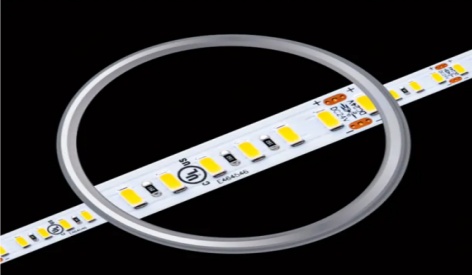
An SMD LED strip light is a flexible lighting solution made from a thin printed circuit board (PCB) populated with surface-mounted LEDs arranged at consistent intervals. Because the strip is slim, bendable, and lightweight, it can be installed in a wide range of locations—from ceilings and walls to cabinets, shelves, vehicles, and architectural features. Most strips come with a strong adhesive backing, allowing users to mount them quickly and securely on almost any clean, dry surface. Their versatility, brightness, and energy efficiency make SMD LED strips a popular choice for both decorative and functional lighting.
A typical SMD LED strip consists of several essential components:
SMD LED chips (such as 2835, 5050, and 3528)
Flexible PCB that carries electrical current
Resistors or constant current circuits for LED protection
Adhesive backing, often 3M, for easy installation
Power connectors or cut points to adjust length and connect to drivers
Some advanced strips also feature additional enhancements:
Waterproof silicone coatings for outdoor or humid environments
Aluminum profiles or channels for improved heat dissipation and durability
Smart controllers enabling dimming, color adjustments, and programmable lighting effects
Together, these components create a powerful and customizable lighting solution that functions well in residential, commercial, and industrial settings.
When browsing LED strip lights, you may encounter numbers like 2835, 5050, or 5630. These refer to the physical dimensions of the LED chip:
2835 → 2.8mm × 3.5mm
3528 → 3.5mm × 2.8mm
5050 → 5.0mm × 5.0mm
5630 → 5.6mm × 3.0mm
Each chip size delivers different brightness levels, power consumption, and color performance. For example, 5050 chips are larger and support RGB color mixing, producing high brightness suitable for accent or entertainment lighting. On the other hand, 2835 chips are more energy-efficient and ideal for continuous, soft illumination in task or ambient applications.
SMD LED strip lights function through a low-voltage DC power supply (commonly 12V or 24V). When powered, electricity flows through the PCB to each LED chip, exciting the semiconductor material and creating light.
Common options include:
12V strips – suitable for short runs and basic installations
24V strips – lower voltage drop, better for long installations
5V USB strips – used for TV backlighting, PC builds, and small décor
Higher voltage systems (48V or constant current strips) exist for commercial applications where extremely long runs are needed.
Brightness depends on:
LED chip size
Number of LEDs per meter (e.g., 30/60/120/240 LEDs per meter)
Power consumption (watts per meter)
Color temperature
High-density strip lights can produce exceptionally uniform illumination without visible light spots.
High-quality SMD strips offer:
High CRI (Color Rendering Index) above 90
Stable color temperature
No flicker when paired with appropriate drivers
This makes them ideal for environments where lighting accuracy matters, such as studios, kitchens, or retail spaces.
SMD LED strip lights come in many variations, designed for different lighting needs.
These strips emit one consistent color, such as:
Warm white (2700K–3000K)
Neutral white (4000K)
Cool white (6000K–6500K)
Red, green, blue, or amber
Single-color strips are commonly used for task lighting, architectural lines, and accent illumination.
RGB strips combine red, green, and blue LEDs to create millions of colors.
RGBW strips include an additional white LED for better natural whites.
These are ideal for entertainment spaces, restaurants, events, and mood lighting.
These strips allow users to adjust color temperature from warm to cool, simulating natural daylight cycles.
COB (Chip on Board) strips integrate densely packed LED chips for a smooth, dot-free light line. They are especially popular in minimalist designs.
Coated with silicone or encased in tubing, these strips are used for:
Outdoor signage
Garden lighting
Bathrooms and kitchens
Marine or vehicle applications
SMD LED strips bring numerous advantages across various applications.
They can be bent, cut, extended, and installed in countless locations, making them ideal for:
Under-cabinet lighting
Ceiling coves
Drawer illumination
Staircase and pathway lighting
Display showcases
SMD LEDs consume significantly less electricity than traditional lighting while offering superior brightness.
Most high-quality strips last 30,000–50,000 hours, reducing replacement frequency and maintenance efforts.
SMD LED strips can be dimmed, color-changed, and programmed using smart controllers, offering unmatched lighting customization.
Adhesive backing and flexible PCBs make installation accessible even for nonprofessionals.
SMD LED strip lights are used across multiple environments:
Kitchen under-cabinet lighting
Staircase illumination
Bedroom accent lighting
Bathroom mirror lighting
Home theater backlighting
Product display lighting
Shelf and showcase illumination
Restaurant ambiance lighting
Hotel lobbies and hallways
Designers use strip lights to highlight:
Ceiling coves
Wall niches
Building facades
Outdoor walkways
Flexible SMD strips are used for:
Car interior ambient lighting
RV and boat lighting
Offroad vehicle accent illumination
Suitable for:
Machine vision systems
Workbenches
Display inspection areas
Their brightness, reliability, and low heat output make them ideal for task environments.
With so many options available, selecting the right strip requires careful consideration.
Decorative lighting → low-density strips
General illumination → medium-density
Task or commercial lighting → high-density or COB strips
12V → small projects
24V → long runs
48V → commercial applications
IP20 → indoor, dry areas
IP65 → splash-resistant
IP67/IP68 → outdoor and underwater
Warm white for cozy environments
Cool white for workspace clarity
RGB/RGBW for dynamic ambiance
Tunable white for adaptable settings
High CRI (>90)
Thick copper PCB
Consistent color binning
Reliable adhesive
Proper heat dissipation
Choosing a reputable manufacturer ensures better performance and longer lifespan.
SMD LED strip lights have revolutionized modern lighting with their combination of flexibility, brightness, energy efficiency, and ease of use. From homes to commercial buildings and industrial environments, they are a reliable and adaptable choice for creating both functional and aesthetic lighting systems. Whether you need bright task lighting, dramatic color effects, or soft ambient illumination, SMD LED strips offer a solution for nearly every application.
For those looking for high-quality, durable, and professionally engineered SMD LED strip lights, ORIENT LIGHTING Co., Ltd. is an excellent place to explore further. The company offers a wide range of LED lighting solutions designed for performance, efficiency, and long-term reliability. If you are planning a lighting project or need expert guidance, you can visit their website to learn more or get in touch with their team for recommendations tailored to your lighting needs.